Masonry
Tuckpointing & Mortar Joint Repair
Tuckpointing and mortar joint repair address deteriorated joints between masonry units while preserving suitable surrounding brick or stone.
Explore the service
Missouri • Local project planning
Planning brickwork & masonry at a property in Marshfield? Start with the condition of the existing work, your intended outcome, and the information needed for an estimate. Classic Masonry Springfield can discuss the project location, scope, and next steps.

Take photographs that show both the affected area and the surrounding materials. Note whether the concern followed an impact, a leak, or another building project. That record is more useful than immediately deciding that all the visible masonry needs replacement. It gives the assessment a starting point and preserves the appearance of earlier repairs.
Brickwork brings individual masonry units, mortar joints, and structural details together into walls, entries, and architectural features. Classic Masonry Springfield helps property owners plan new brickwork and repairs, with an estimate based on the material, condition, and size of the project.
Brick sizes, edge shapes, surface finishes, and mortar joints all influence the finished appearance. Bring a wide photograph as well as a close-up when requesting an estimate. Even a close color match can look different if the joint width or tooling changes.
A crack may involve the mortar, a brick, a supporting element, or movement beyond the visible surface. The assessment should distinguish a localized defect from a condition that needs further evaluation. Covering the face of a crack does not resolve every cause.
For a new feature, establish its dimensions and relationship to doors, walks, and landscaping first. Material selection should follow the design and support requirements. That sequence is more useful than choosing a brick from a small sample and trying to design around it later.
A joint repair retains different material from a partial rebuild. A crown replacement addresses a different component from a flue repair. Ask which existing parts remain and why that approach is appropriate. The answer should help you understand the project, not merely replace one unfamiliar service term with another.
Marshfield's official city website provides forms, permits, codes, and a city directory. Those resources help identify the appropriate local contact for a property project. Use the full work description when asking a question; a chimney repair and the removal of part of a building are not interchangeable scopes.
Marshfield municipal resourcesDescribe the location, approximate dimensions, and the change you want to make.
Review the condition and discuss matching materials, access, and support.
Confirm the repair boundaries or new construction details in the estimate.
Complete the agreed masonry work and discuss cleanup and ongoing observation.
Every project is priced from its own scope. A generic starting price cannot account for the actual condition, access, and work involved. These are the details to discuss.
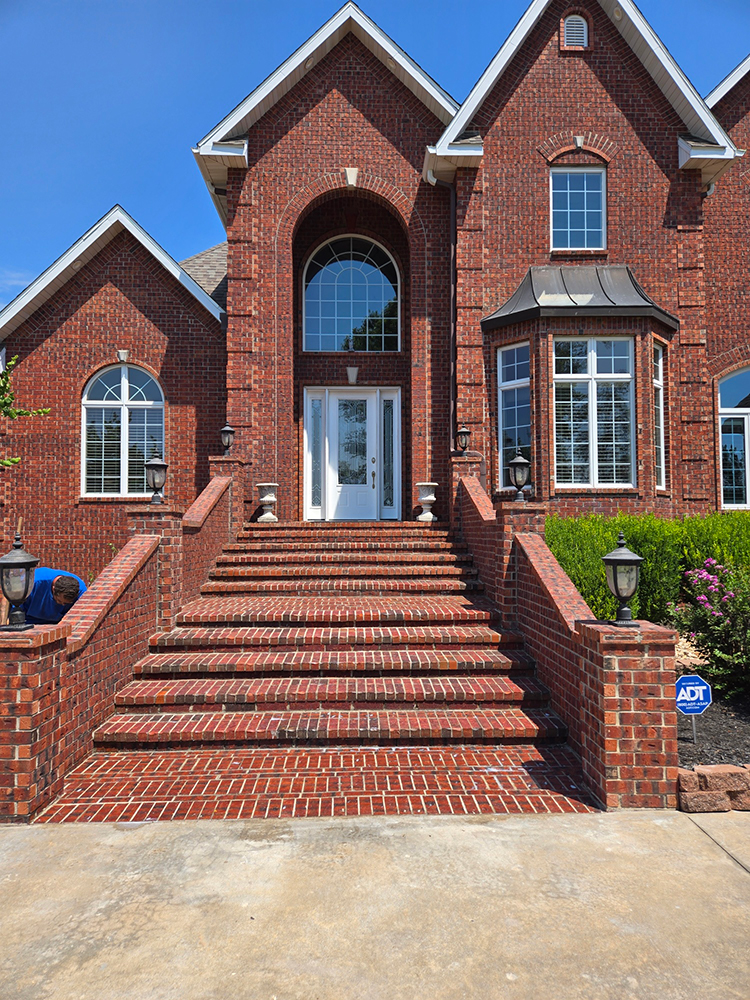
Use this visual reference to explain what you like or what needs attention. Your property's dimensions, existing materials, and construction determine the appropriate scope.
Explore the image collectionTuckpointing and mortar joint repair address deteriorated joints between masonry units while preserving suitable surrounding brick or stone.
Explore the serviceCustom masonry turns a specific design goal into a brick or stone feature planned for its setting and intended use.
Explore the serviceHistoric masonry restoration focuses on preserving useful older brick or stone while addressing deterioration with an approach compatible with the existing work.
Explore the serviceHave a question about your property? Give us a call. The actual condition and scope guide the answer.
(417) 859-6388 ↗Contact Classic Masonry Springfield with the Marshfield property location and a description of the work. The condition, access, scope, and scheduling requirements will guide the estimate conversation.
A close match depends on more than brick color. Size, texture, mortar, weathering, and joint tooling matter too. The estimate discussion should identify what can be matched and where a transition will remain visible.
No. Cracks can have different causes and significance. Changes in width, displacement, and the surrounding structure help guide the assessment; a photograph alone cannot establish structural safety.
Localized repair may be appropriate when the surrounding masonry and support are sound. The repair boundary should follow the actual condition, not an arbitrary rectangle that leaves damaged work behind.
Take one image of the complete feature, a closer view of the damage, and an image of its connection to the roof, ground, or adjacent wall. Stay on the ground and avoid loose masonry.
An estimate can identify assumptions and foreseeable scope. Concealed conditions may require a further discussion when discovered; they should not be silently treated as already included.
Tell us what you are planning. We will help define the next step and the estimate your project needs.